
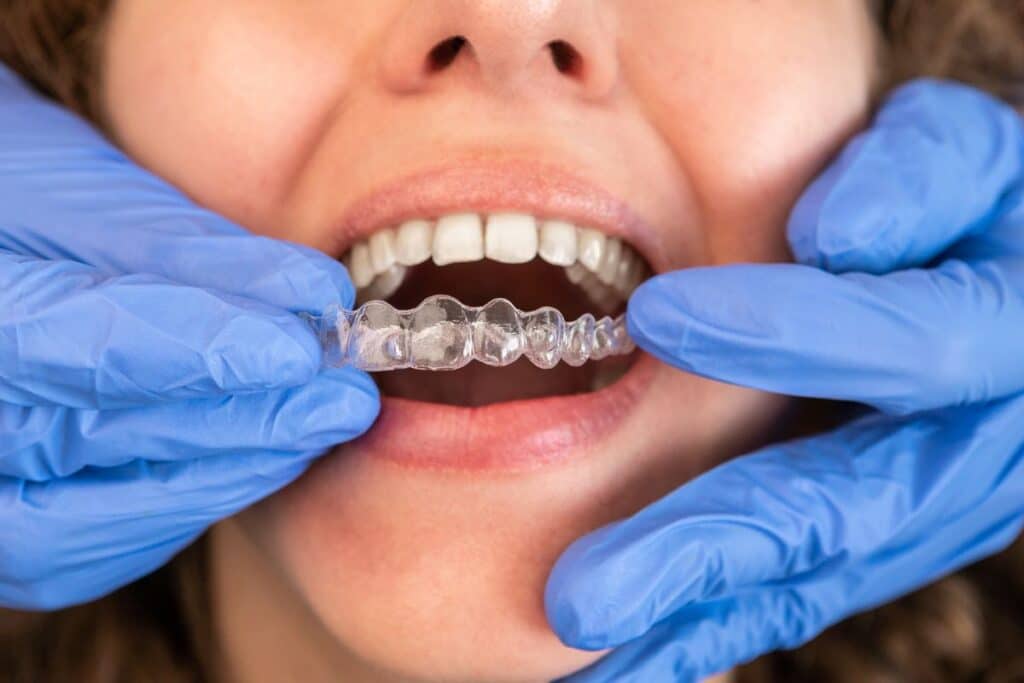
Thinking about straightening your teeth with clear aligners but worried about what they might do to your teeth? That concern is completely understandable. Invisalign is designed to move teeth gradually, but successful treatment depends on more than simply wearing a set of clear trays. Your oral health, hygiene habits, bite, and orthodontic supervision all matter.
For patients in Hewlett and the surrounding Five Towns communities, clear aligners can be an appealing option because they fit into busy school, work, family, and social schedules. But before starting treatment, it helps to understand the possible risks, how to protect your teeth, and why professional monitoring makes a difference.
Does Invisalign Damage Teeth?
Invisalign itself is not generally expected to damage healthy teeth when treatment is properly planned and monitored by an orthodontist. The aligners apply controlled pressure to gradually guide teeth into healthier positions. Kleinrock Orthodontics explains that Invisalign aligners are removable, making it easier for patients to brush and floss compared with fixed braces.
Problems are more likely to develop when aligners are used incorrectly or oral hygiene is neglected. Wearing trays over teeth covered with food, drinking sugary beverages while wearing them, or failing to clean the teeth and aligners can increase the risk of plaque buildup, tooth decay, and gum irritation.
The good news? Many of these concerns are preventable with simple daily habits and regular orthodontic checkups.
How Clear Aligners Move Teeth Safely
Invisalign treatment uses a series of customized aligners. Each aligner is designed to make a specific, gradual adjustment rather than forcing teeth into a new position all at once.
During treatment, your orthodontist evaluates your teeth and bite and develops a plan based on your individual needs. Kleinrock Orthodontics uses digital technology and personalized treatment planning to guide orthodontic movement.
That professional oversight is important. Teeth are supported by bone and surrounding tissues, so orthodontic movement needs to be carefully planned. An orthodontist can monitor progress and identify concerns before they become bigger problems.
What Can Actually Cause Problems During Treatment?
Clear aligners are removable, but that flexibility comes with responsibility. A few everyday habits can affect your oral health during treatment.
Poor Oral Hygiene
Aligners fit closely over your teeth. If plaque and food debris remain on your teeth before you put them back in, bacteria can remain trapped against the tooth surfaces.
Brush thoroughly and floss regularly before replacing your aligners, particularly after meals.
Drinking Sugary or Acidic Beverages
Water is the safest choice while wearing aligners. Soda, sports drinks, sweetened coffee, and other sugary or acidic beverages can expose teeth to substances that contribute to decay and enamel erosion.
If you enjoy your morning coffee during a busy Hewlett commute, remember to remove your aligners first and clean your teeth before putting them back in.
Wearing Aligners Incorrectly
Your orthodontist will provide specific instructions about how long to wear each aligner and when to move to the next one. Ignoring those instructions can interfere with treatment progress and may place unnecessary pressure on your teeth.
Ignoring Discomfort or Changes
Mild pressure or tenderness can occur when teeth begin adjusting. However, persistent pain, significant swelling, damaged aligners, or a bite that feels noticeably different should be discussed with your orthodontic team.
Simple Ways to Protect Your Teeth
Want to keep your teeth healthy while working toward better alignment? Make these habits part of your routine:
- Brush and floss thoroughly before replacing your aligners.
- Clean your aligners as directed by your orthodontist.
- Choose plain water while wearing your trays.
- Follow your prescribed wear schedule.
- Keep scheduled orthodontic appointments.
- Tell your orthodontist about persistent pain, sensitivity, or gum changes.
- Never move to a new aligner ahead of your prescribed schedule.
- Continue routine dental checkups and professional cleanings.
Proper alignment can also make everyday brushing and flossing easier because crowded or overlapping teeth can create areas where plaque is harder to remove.
Why Local Orthodontic Care Matters
Choosing an orthodontist close to home can make treatment easier to manage, especially when appointments need to fit around school, work, sports, or family schedules.
Kleinrock Orthodontics is located on Broadway in Hewlett and serves patients from communities throughout the South Shore and Five Towns area, including Woodmere, Lawrence, Valley Stream, Oceanside, Cedarhurst, Rockville Centre, Lynbrook, Long Beach, and Rockaway Beach. The practice treats children, teens, and adults with individualized orthodontic care.
For someone comparing options for the best Invisalign in Hewlett, the right provider should be more than a convenient location. Experience, treatment planning, monitoring, and communication should all be part of the decision.
When Should You Talk With an Orthodontist?
If you are considering clear aligners, a consultation is the best way to determine whether they are appropriate for your teeth and bite.
An orthodontist can evaluate:
- Tooth crowding or spacing
- Bite alignment
- Existing dental concerns
- Your oral hygiene
- Previous orthodontic treatment
- Whether clear aligners are suitable for your specific case
Invisalign can treat many common alignment concerns, but it is not automatically the right choice for every patient. More complex bite problems may sometimes require another orthodontic approach.
Frequently Asked Questions
Can clear aligners cause cavities?
Clear aligners do not typically cause cavities by themselves. However, poor brushing, flossing, and dietary habits can allow plaque and bacteria to remain against the teeth, increasing the risk of decay.
Can Invisalign weaken tooth enamel?
Properly supervised orthodontic treatment is designed to move teeth gradually rather than damage enamel. Maintaining good oral hygiene and following your orthodontist’s instructions are important for protecting your teeth throughout treatment.
Is it normal for teeth to feel sore with aligners?
Some pressure or mild tenderness can occur as your teeth adjust to a new aligner. Significant or persistent pain should be discussed with your orthodontist.
Can I eat or drink while wearing aligners?
Aligners should generally be removed for eating and for beverages other than water. Cleaning your teeth before replacing the trays helps reduce the chance of trapping food and bacteria against your teeth.
How do I know if Invisalign is right for me?
The best way to find out is through an orthodontic evaluation. Your orthodontist can assess your teeth, bite, oral health, and treatment goals before recommending clear aligners or another option.
A Healthier Approach to a Straighter Smile
Clear aligners should not be something you fear—they should be something you understand. When treatment is customized, monitored by an orthodontist, and supported by good daily hygiene, you can work toward better alignment while keeping your teeth and gums a priority.
If you are considering Invisalign in Hewlett, take the guesswork out of your decision. Schedule a consultation with Kleinrock Orthodontics to discuss your orthodontic goals and learn whether clear aligner treatment is a good fit for you.